Ryder Navigates Moderate Second Quarter with Optimistic Outlook, Driven by Strategic Adjustments and Strong Used Vehicle Market

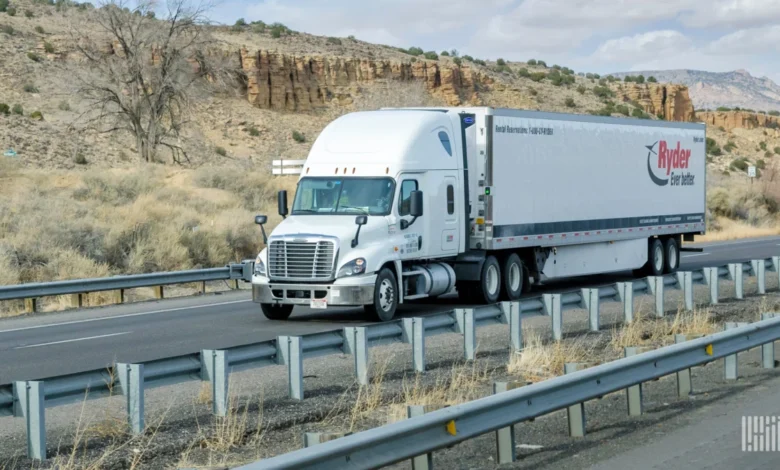
Ryder System, Inc. (NYSE: R), a prominent player in commercial fleet management, supply chain, and dedicated transportation solutions, reported a solid yet not spectacular performance for its second quarter, signaling sufficient optimism to slightly elevate its financial forecasts for the latter half of the year. The results, closely watched by investors and industry analysts, underscore Ryder’s adept navigation of a dynamic market environment, characterized by evolving truck capacity, persistent inflationary pressures, and strategic adjustments to its core business segments.
Ariel Rosa, a seasoned analyst at Citi, characterized Ryder’s second-quarter showing as largely in line with Citi’s internal projections. In a concise post-earnings release commentary, Rosa remarked, "It was a moderate quarter given the relatively in-line print and guides," a sentiment that resonated across many financial desks observing the transportation and logistics sector. This analytical alignment provided a sense of stability regarding Ryder’s operational transparency and predictability in its financial disclosures.
Second Quarter Financial Highlights and Market Reaction
For the second quarter, Ryder delivered non-GAAP earnings per share (EPS) of $3.73, marking a commendable 12% increase compared to the same period last year. This figure surpassed both Citi’s estimate of $3.71 and the broader Wall Street consensus of $3.69, indicating a slight outperformance against analyst expectations. Non-GAAP EPS, which adjusts for certain one-time or non-recurring items, offers a clearer picture of a company’s underlying operational profitability.
Despite the positive earnings beat, Ryder’s stock experienced a decline on the day of the announcement. At approximately 2:40 p.m. EST, its shares were down 3.55%, or $9.81, trading at $266.56, amidst a broader market selloff. This market reaction, occurring on a "heavy selloff day for Wall Street," suggests that while Ryder’s performance was robust internally, it was not immune to wider macroeconomic pressures or profit-taking sentiments that characterized the trading session. The company’s earnings release did note that a significant portion of its performance impact came from strategic share repurchases, a common method companies use to return value to shareholders and boost EPS.
Fleet Management Solutions (FMS) and Strategic Fleet Adjustments
Ryder’s Fleet Management Solutions (FMS) segment, which encompasses its core truck rental and leasing operations, reported operating revenue of $1.303 billion. This represented a 1% sequential increase from the previous quarter and edged past Citi’s consensus estimate of approximately $1.29 billion. This slight uplift in FMS revenue was attributed by Citi to "truck capacity reduction providing some support," implying that a tightening market for commercial vehicles allowed Ryder to maintain or slightly increase pricing power for its rental and leasing services.
However, a closer look at FMS revealed a strategic paradox: while market conditions offered support, Ryder’s average fleet size saw a significant year-over-year reduction of 15%. This decision, likely aimed at optimizing asset utilization and capital efficiency, could inherently limit Ryder’s ability to fully capitalize on a strengthening market demand for trucks. The company’s commercial rental average fleet count stood at 29,200 vehicles in the second quarter, a decrease from 34,300 a year ago and 30,500 sequentially. Despite this reduction, Ryder demonstrated enhanced operational efficiency, with its utilization rate for commercial rentals improving by 5 percentage points to reach 75%. This indicates that the company is effectively leveraging its existing assets, generating more revenue from fewer vehicles, aligning with a broader industry trend toward asset optimization and efficiency in fleet management.
The Enduring Impact of Used Vehicle Sales
Ryder has, for many years, pursued a strategic diversification of its business model to lessen its reliance on the cyclicality and volatility of used vehicle sales. This push towards expanding its Supply Chain Services (SCS) and Dedicated Transportation Solutions (DTS) segments aims to create more stable, contract-based revenue streams. Despite these efforts, used vehicle sales continue to be a significant variable influencing Ryder’s profitability, proving to be a "key boost" in the strong first-quarter performance and a "clear tailwind" in the second quarter as well.
The second quarter witnessed favorable market conditions for used commercial vehicles. Tractor sales recorded an average price increase of 3% compared to the second quarter of 2025, while truck sales saw an even more robust year-on-year increase of 6%. These price gains occurred even as the company sold fewer vehicles, with 5,100 units moved in Q2 2026, down from 6,200 in Q2 2025. However, this figure represented a sequential increase from 4,600 vehicles sold in the first quarter of 2026, suggesting a rebound after a potential dip earlier in the year.
John Diez, Ryder’s CEO, acknowledged the positive contribution, stating in the earnings report, "In used vehicle sales, results outperformed our expectations as market conditions continued to strengthen." This commentary underscores the robust demand and pricing power Ryder experienced in this segment.
From a financial reporting perspective, used vehicle sales are treated as a cost center. In Q2, the net impact of these sales was a negative $7 million, which is a positive for the company’s costs (meaning sales revenue exceeded the booked residual value for depreciation). This compares favorably to a positive $2 million a year ago and a negative $12 million in the first quarter when used vehicle sales were explicitly highlighted as a performance driver.
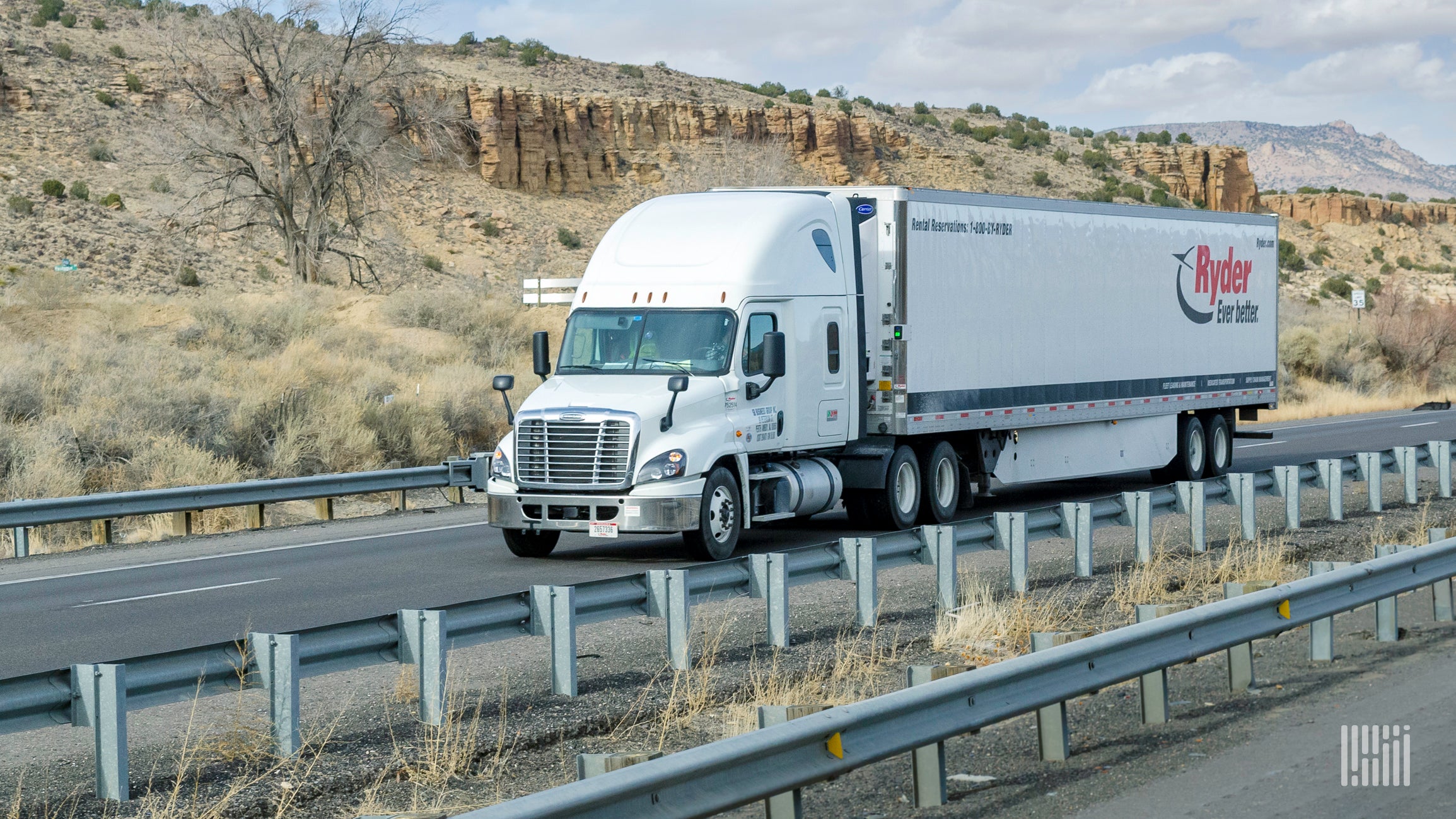
Cristina Gallo-Aquino, Ryder’s CFO, elaborated on the favorable pricing dynamics during the analyst call, confirming that the sale of vehicles at prices exceeding their residual value estimates for depreciation purposes continues to "prevail." This situation directly contributes to the company’s bottom line. Consequently, the projected gains from these sales for the full year have been raised to approximately $40 million, an increase of $10 million from earlier forecasts. Gallo-Aquino also indicated that Ryder expects to generate about $500 million in proceeds from used vehicle sales this year, aligning with the figures collected in 2025. Looking ahead, CEO John Diez expressed confidence in the market’s trajectory, anticipating "second half improvement, and certainly going into 2027, we would expect year over year that pricing will continue to accelerate into that double-digit range." This long-term outlook on used vehicle pricing bodes well for Ryder’s asset management strategy.
A tweet from industry observer John Kingston provided further context, noting, "The most important takeaway from the used tractor sales data in the $R quarterly earnings is that used tractor sales were up 6% sequentially. The first quarter downturn now looks like an outlier. The 6% sequential number is what was recorded in the fourth quarter also." This expert analysis reinforces the positive momentum in the used vehicle market for Ryder, suggesting that Q1’s performance was an anomaly rather than a trend.
Revised Full-Year Outlook for 2026
Buoyed by its second-quarter performance and strategic gains, Ryder has updated its full-year forecast for 2026, signaling increased confidence in its operational trajectory. The company’s projection for non-GAAP earnings per share has been revised upward to a range of $14.40 to $14.80, a modest but significant increase from the $14.05 to $14.80 forecast provided in the first quarter. Similarly, the expected return on equity (ROE), a key measure of profitability in relation to shareholder equity, has been improved to 18%, up from the prior forecast range of 17% to 18%.
Operating revenue growth for the year remains projected at 3%, primarily driven by the robust performance of its Supply Chain Services (SCS) contract logistics segment. The SCS segment demonstrated consistent growth, with the average number of customer vehicles under Select Care contracts increasing to 44,300, up from 43,000 a year ago and 43,900 sequentially. This steady expansion in contract logistics underscores Ryder’s successful diversification strategy and its ability to secure long-term, stable revenue streams. Projections for net cash and free cash flow remain unchanged at $2.7 billion and $700-$800 million, respectively, indicating stable cash generation capabilities.
Navigating Future Challenges: EPA Regulations and Driver Capacity
Ryder’s earnings call also delved into critical industry challenges that will shape its capital expenditure plans and operational strategies in the coming years. A prominent topic was the upcoming 2027 emissions changes mandated by the Environmental Protection Agency (EPA), particularly the tighter rules on nitrogen oxide (NoX). While recent adjustments to this rule were not as sweeping as some in the industry had anticipated, their implications for truck manufacturers and fleet operators like Ryder remain substantial.
The primary concern for Ryder, as articulated by CEO John Diez, revolves around the anticipated price increases for new trucks. "I think we’re still sitting on the fact that we’re waiting for the OEMs to reveal what the price increases are going to be for the second half," Diez stated, highlighting the uncertainty surrounding capital expenditure planning. He emphasized that until this information is received from original equipment manufacturers (OEMs), Ryder cannot effectively pass along these increased costs to its customers.
Despite this pending clarity, Diez does not foresee "dramatically different" changes from what Ryder has already been planning. He noted that the company anticipates "significant increases to not only deal with the EPA regulatory change, but also with some of the inflation and tariff-related activity that the OEMs are looking to pass on to the customers." Ryder expects to gain more clarity on these pricing adjustments during the third quarter, which will be crucial for finalizing its investment strategies and customer contracts for the transition to 2027-compliant vehicles.
Another pressing issue discussed was the tightening driver capacity, particularly impacting Ryder’s Dedicated Transportation Solutions (DTS) segment. Diez confirmed, "we are seeing evidence of tighter driver capacity," observing that "the number of days that it takes to find drivers has ticked up a little bit." This trend reflects a broader challenge within the trucking industry, where a persistent shortage of qualified drivers impacts efficiency and operational costs. For Ryder, this tightening capacity translates into increased demand for its dedicated services, as companies increasingly turn to third-party providers to manage their complex transportation needs. Diez indicated that Ryder’s "pipeline shows that" and "sales activity shows that," leading him to "suspect we’re going to continue to see good strong sales here for the balance of the year" in the DTS segment.
Broader Industry Implications and Ryder’s Strategic Position
Ryder’s Q2 results and its forward-looking statements offer valuable insights into the current state and future trajectory of the logistics and transportation sectors. The sustained strength in used vehicle pricing, despite efforts to diversify, underscores the lingering impact of supply chain disruptions and production bottlenecks that have limited new vehicle availability. As new truck prices are set to rise further due to regulatory changes and inflationary pressures, the demand for well-maintained used vehicles could remain elevated, continuing to provide a tailwind for companies like Ryder with large, well-managed fleets.
The company’s success in improving utilization rates while reducing its fleet size in FMS highlights an industry-wide push for greater efficiency and asset optimization. This strategy allows Ryder to mitigate the risks associated with large capital investments in depreciating assets while maximizing returns from its existing fleet. The steady growth in Supply Chain Services (SCS) and the increasing demand for Dedicated Transportation Solutions (DTS) due to driver shortages further validate Ryder’s long-term diversification strategy, positioning it as a resilient partner for businesses navigating complex logistics challenges.
In conclusion, Ryder’s second quarter demonstrated a steady hand at the helm, achieving solid financial metrics and boosting its full-year outlook amidst a nuanced economic landscape. While external pressures such as broader market selloffs and impending regulatory costs present challenges, the company’s strategic adjustments, strong performance in used vehicle sales, and growth in its contract logistics and dedicated transportation segments provide a robust foundation for continued performance in the second half of 2026 and beyond. The focus on efficiency, strategic capital allocation, and responsiveness to market dynamics will be crucial as Ryder navigates the evolving demands of the global supply chain.